Unseasonably cold spring brings mixed fortunes to South Korea's fashion retailers
Donga Economy
South Korea’s apparel industry is bracing for a difficult season as erratic weather upends traditional sales patterns. Springs are getting shorter each year, and the abrupt shift from a prolonged winter to summer — with little in between — has left retailers with almost no window to sell their spring collections.
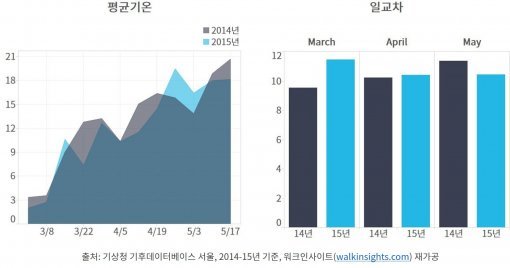
This year’s spring (March through May) saw average temperatures run below the prior year’s for nine or more consecutive weeks, with wide daily temperature swings. Fall/winter merchandise sold for longer than usual, while spring new arrivals moved sluggishly.
“March and April are normally peak season for dress sales, but this spring our dress revenue was down 11%, while lightweight jackets and cardigans jumped 38%,” said a representative from Odd, an online women’s clothing retailer. “We were able to limit our losses because we worked with a data analytics firm to pick up on these shifts early and respond quickly with the right product mix.”
Brick-and-mortar fashion stores, meanwhile, told a more surprising story. Rather than seeing fewer customers due to the cold, many physical retailers actually recorded higher footfall.
ZOYI Corporation, an offline retail customer analytics firm, analyzed store visit rates and behavior patterns across major street-level retail locations over the past three months. The data showed that for every 5.7°C drop in average temperature, store visit rates rose by 22.5%. At the same time, the share of passersby who left within one minute of entering fell by 6.7%, suggesting that the cold weather was driving people off the street and into stores.
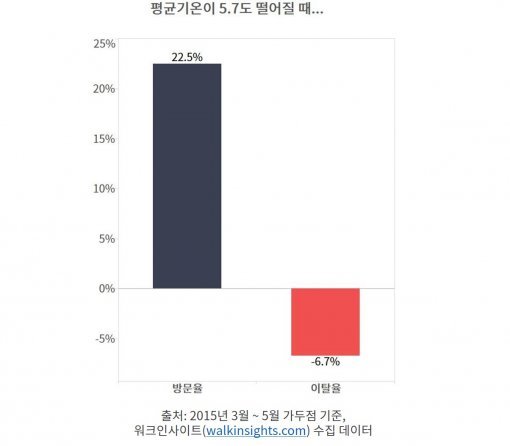
“When the weather is unpredictable, customers tend to step into stores to escape the chill — meaning visit rates go up and walkouts go down,” said Elly Han, Insights Director at ZOYI Corporation. “But the uptick in foot traffic only translated into actual sales growth for stores that quickly recognized the low demand for spring merchandise and adapted their product mix accordingly.”
Stores that leaped ahead to summer, however, fared no better. One foreign fashion brand that switched its window displays to a summer theme in April saw visit rates decline by 0.5 percentage points compared to the period before the change. With the prolonged cold killing demand for both spring and summer merchandise alike, the March-to-May period has become what some in the industry are calling a “cursed season.”
“For fashion brands, which are directly exposed to environmental shifts like climate change, getting seasonal product planning and inventory management right has become one of the most pressing challenges,” said Choi Si-won, CEO of ZOYI Corporation. “Physical stores increasingly can’t rely on simple sales data alone. To compete with the pace of online innovation, retailers need to track and improve on key metrics — visit rate, dwell-to-conversion rate, return visit rate — and find ways to grow using a more rigorous, data-driven approach.”